Autobiography

The sniff of the real, that’s
what I’d want to get
      how it felt
to sit on Parliament
Hill on a May evening
studying for exams    skinny
seventeen     dissatisfied
        yet sniffing such
a potent air, smell of
grass in heat from
the day’s sun

I’d been walking through the damp
rich ways by the ponds
and now lay on the upper
grass with Lamartine’s poems

life seemed all
loss, and what was more
I’d lost whatever it was
before I’d even had it

a green dry prospect
distant babble of children
and beyond, distinct at
the end of the glow
St Paul’s like a stone thimble

longing so hard to make
inclusions that the longing
has become     in memory
an inclusion


Thom Gunn
from Worlds: Seven Modern Poets (edited by Geoffrey Summerfield), Penguin, 1974
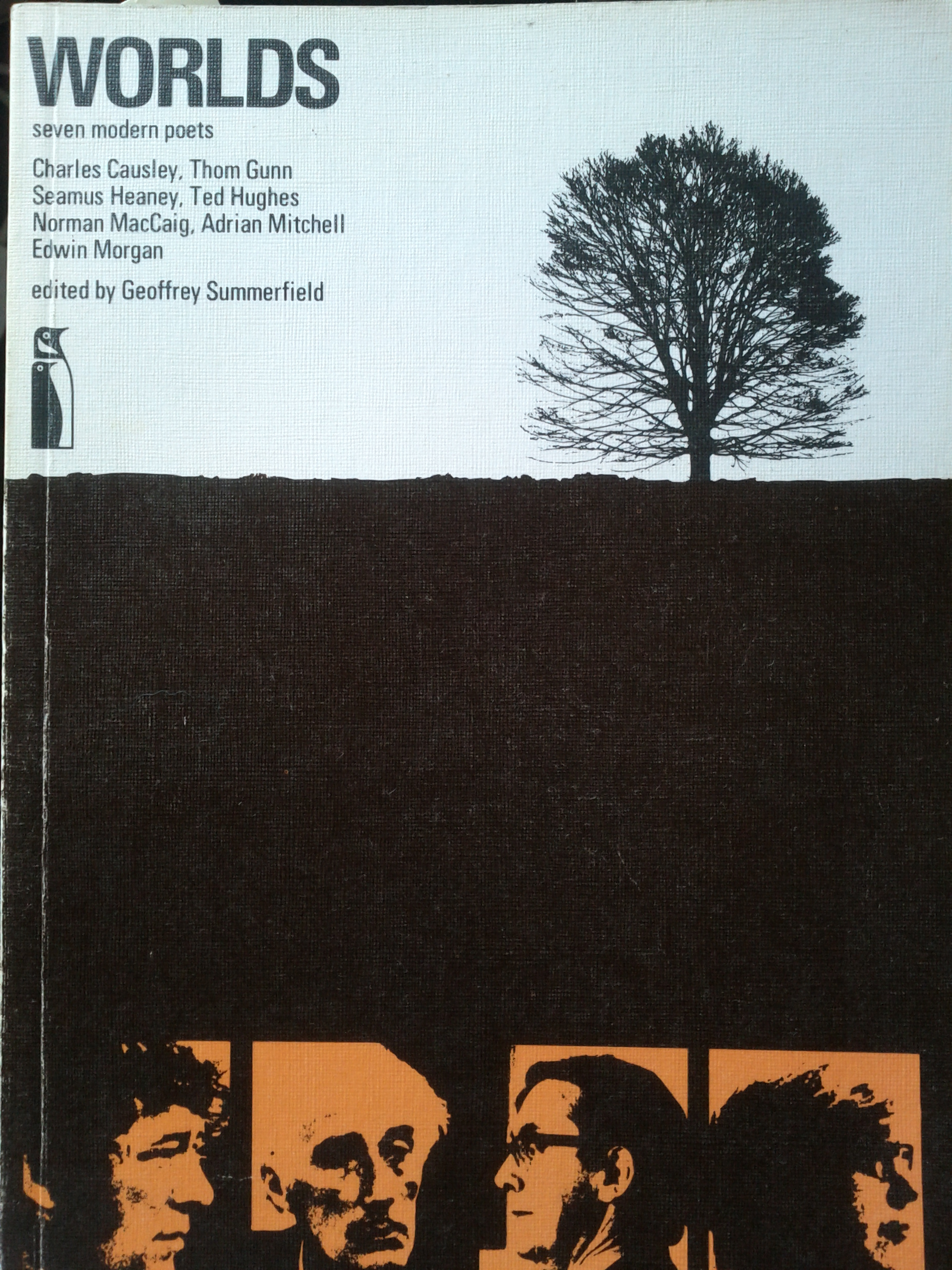
Thom Gunn’s ‘Autobiography’ (from Geoffrey Summerfield’s Worlds: Seven Modern Poets, 1974), along with Norman MacCaig’s ‘Aunt Julia’, was among the first poems I can remember placing myself at the centre of as I read it.
I can remember a little depth-charge of a tremor going off in my brain on encountering Ted Hughes’s ‘The Retired Colonel’ in an English lesson at school, but this was something altogether new and exciting.
The experience of reading the book as a whole represents to me now something of a watershed: real money had changed hands for it, the first time I had invested, literally and otherwise, in a book. I was seventeen at the time, exactly the age of the speaker in Gunn’s poem.
Looking back at it now, I suppose I understood half of Worlds, took in less of it, but comprehensively fell in love with all of it. I have no doubt that from the moment I first read it, I absolutely felt ‘Autobiography’ was written just for me.
I loved finding myself mirrored in lines which looked simultaneously casual and minimal. The seductive repetitive ‘s’ sounds in ‘studying for exams skinny/seventeen dissatisfied’ echo those in the poem’s two instances of the verb ‘sniffing’, from the first and eighth lines, the former a search for the ‘real’ and the latter luxuriating in potency.
I loved the psalm-like purity of the poem’s gorgeous phrasemaking: ‘grass in heat from/the day’s sun’; ‘damp/rich ways by the ponds’; ‘green dry prospect; ‘distant babble of children’.
Finally and most of all I think, I loved that this was a voice from outside of the centre of London. Having grown up in its suburbs, my views of the great city had always been from a distance and protected. Here was a voice that paid homage both to being on the edge of things while clearly desperate to get to the centre. The adolescent nod to the world of children is freighted with both longing and the knowledge of not returning. The need for guidance into the adult world comes in the guise not of parents or teachers but in the form of a book of poems, which is explicitly read in solitude on ‘upper’ grass, with the world as it were at the feet of the speaker.
Yet this version of adolescence sings no notes of triumphalism. The words ‘longing” and ‘inclusion’ are both used four times in the poem’s final Carlos Williams-like stanza. In the words of Ted Hughes’s ‘October Dawn’, you feel that everything is about to start, but not before the memory, and the effort of making it, have been recorded.

 Lifesaving Poems
Oh, I remember this book! Even now I’m getting that thrill of excitement I got at the time. Goosebumps!
LikeLiked by 1 person
Still an amazing book!
LikeLiked by 1 person
Thank you! An extraordinary poem, I could smell the hot grass and undergrowth, and opened up to my own 17 y.o. longing.
I love the image of a thimble, and idea of life being stitched with a giant needle, and gossamer thread, and I think of Thom Gunn, unprotected on the hill, pierced by the needle which draws in his memory and longing.
LikeLiked by 1 person
I’m so pleased you liked this. Thank you for saying so. With best wishes, Anthony
LikeLike
Such a calming poem
LikeLiked by 1 person
Thank you for saying so.
LikeLike