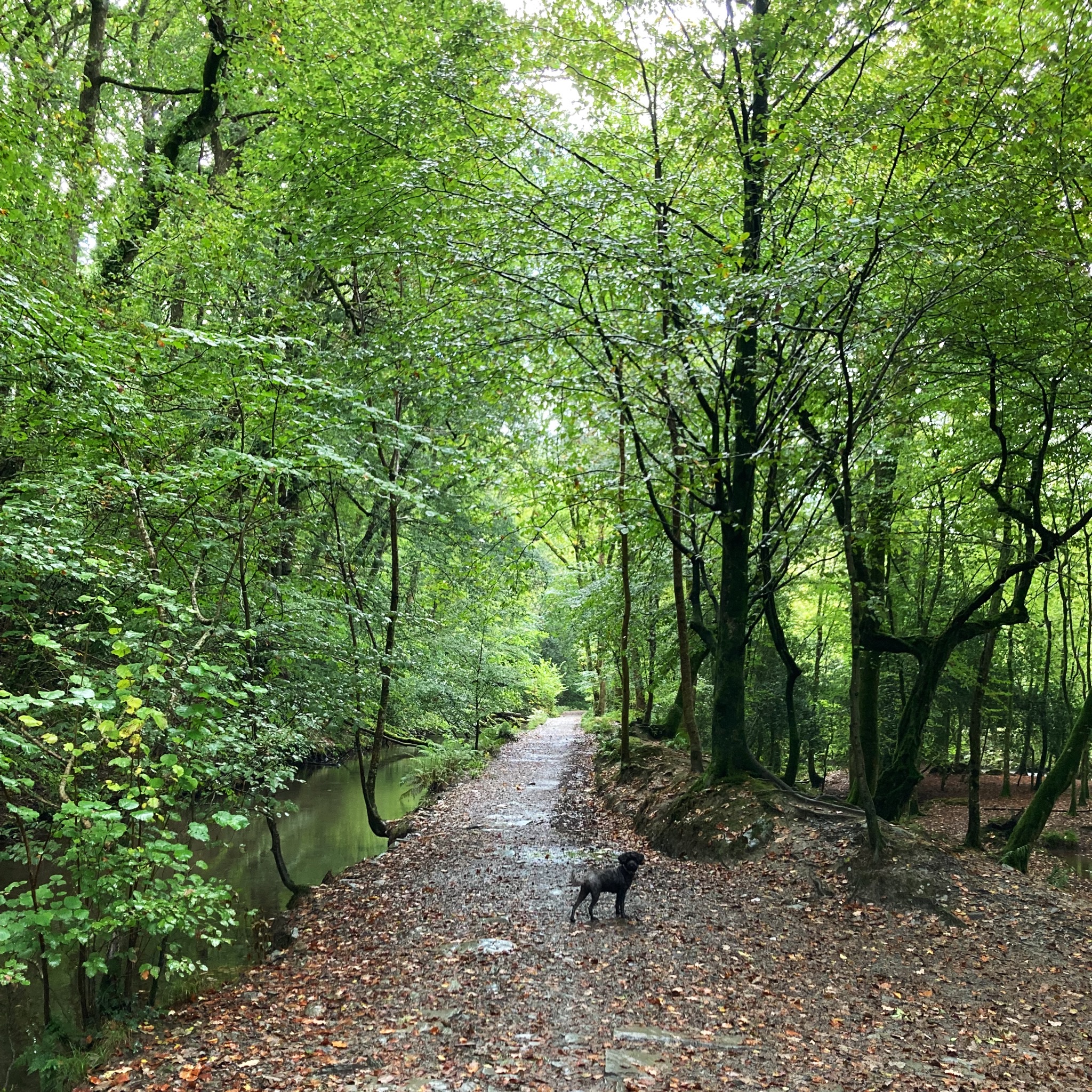
This morning, as on every morning for the last two weeks, the wood was loud with birdsong. I heard robin, wren, blackbird, an extremely jazzy thrush, and somewhere at the back of it all, like Ringo Starr making his presence known in the corners of Abbey Road, a woodpecker, his knocking persistent and timeless. Two dipper came out of nowhere, trailing each other’s twists and turns like Spitfires in an aerial display of astonishing dexterity. Apparently exhausted, they came to land on separate rocks in the stream, their white bibs bobbing. Take away their markings, give them a black beak, and you could be looking at a blackbird. Their song is not a million miles away, either. Then they were away again, lost in their spirals. Leaving the wood for the road back to the car, a wren, briefly at eye level on a fence post, glared at me for a second, then treated me to a solo of distilled purity and scorn.
If you’ve been reading this blog for a while, you might remember my blog post from last year on Tom Paulin’s great poem of anger and healing, ‘A Lyric Afterwards’. Again without going into details, it has been in my mind again recently, as we negotiate the slow-slow-slow-slow-quickquickquick of our beloved NHS as it limps to put right that damage. Not the closing of the poem this time, but the first line of its final stanza: ‘the vicious trapped crying of a wren’. As fulfilment of the lyric utterance promised in the poem’s title, this is worth the admission fee (sorry kids) on its own. Everything you can possibly know about wrens and wren-ness is in those six words. I can’t prove this; I just know it to be true.
This led me, by way of faulty memory, to the much unhappier reading experience of being given 12 Rules for Life by Jordan B. Peterson for my birthday several years ago. It’s not just a book I was unable to finish, it joins a select group of books I have actually thrown across the room. Here he is, three paragraphs into Rule 1 (Stand Up Straight With Your Shoulders Back), writing about our friend the wren:
When songbirds come north in the spring […] they engage in ferocious territorial disputes. The songs they sing, so peaceful and beautiful to human ears, are siren calls and cries of domination. A brilliantly musical bird is a small warrior proclaiming his sovereignty. Take the wren, for example, a small, feisty, insect-eating songbird common in North America. A newly arrived wren wants a sheltered place to build a nest, away from the wind and rain. He wants it close to food, and attractive to potential mates. He also wants to convince competitors for that space to keep their distance. […] Wrens are small, and they’re cute, but they’re merciless.
You don’t need to know me very well to know that I am not the world’s greatest natural scientist. I am the proud owner of one science O level (a C in the toughest-ever Chemistry paper). So while I am not stupid, and in spite of my E in Biology, I do think I knew that this is how birdsong works. In case we don’t get the point, Peterson wastes no time in ramming it home: ‘Territory matters, and there is little difference between territorial rights and social status. It is often a matter of life and death.’ I know the song of the wren, or the knocking of the woodpecker, or the aerial displays of the dipper did not evolve to give me pleasure on my morning walk with my dog. But which am I going to take to my grave, the science (their songs ‘are siren calls and cries of domination’) or the poetry (‘the vicious trapped crying of a wren’)? Which improves my day, the science or the poetry? Which am I going to reach for in these care-laden days?
Just so you know, my copy of the book did not become airborne until I was halfway through Rule 2 (Treat Yourself Like Someone You Are Responsible For Helping). Since when, I gather its author has become something of a celebrity, not to mention filthy rich, for espousing views I will not repeat here about women, trans people, the climate emergency, and race, among others. One can be objectionable as a person, and hold perfectly reasonable views about these things. The opposite can also be true. But it takes a special kind of genius to destroy the pleasures of birdsong, even if you happen to be right.

 Lifesaving Poems
Thank you. And also thank you for the video of the dipper and its song. And also also also (sic) thank you for not holding back on Peterson. These things need saying!
LikeLiked by 1 person
Thank you for saying so, Rosie. I’m glad you saw this. With appreciation for your support, Anthony
LikeLike
I have always found the reductionist view of animal behaviour espoused by Peterson to be very naive. One could say that human dance evolved as a mating strategy, but that isn’t how most people experience it. What is the bird experiencing when it sings? We can’t know, but to say that it definitely won’t be feeling pleasure of some kind seems an extraordinary leap.
LikeLiked by 1 person
Hi Hugh. It’s great to hear from you. Thank you for adding to this post. Yes, reductionist is the word. Maybe this is what people want? Maybe this is how he made his money? Sparrows below the window as I type. Blustery spring day, deep blue sky. With best to you as ever, Anthony
LikeLike